EU Proposes Making Energy Labels More Digital, Less Printed-Paper
On 24 June 2026 the European Commission proposed making appliance energy-label product sheets fully digital. It is a proposal awaiting EU approval, not yet in force.
By CHA News Desk · Updated 28 July 2026
Researched and drafted with AI language-model assistance from cited public sources, per our AI-content disclosure.
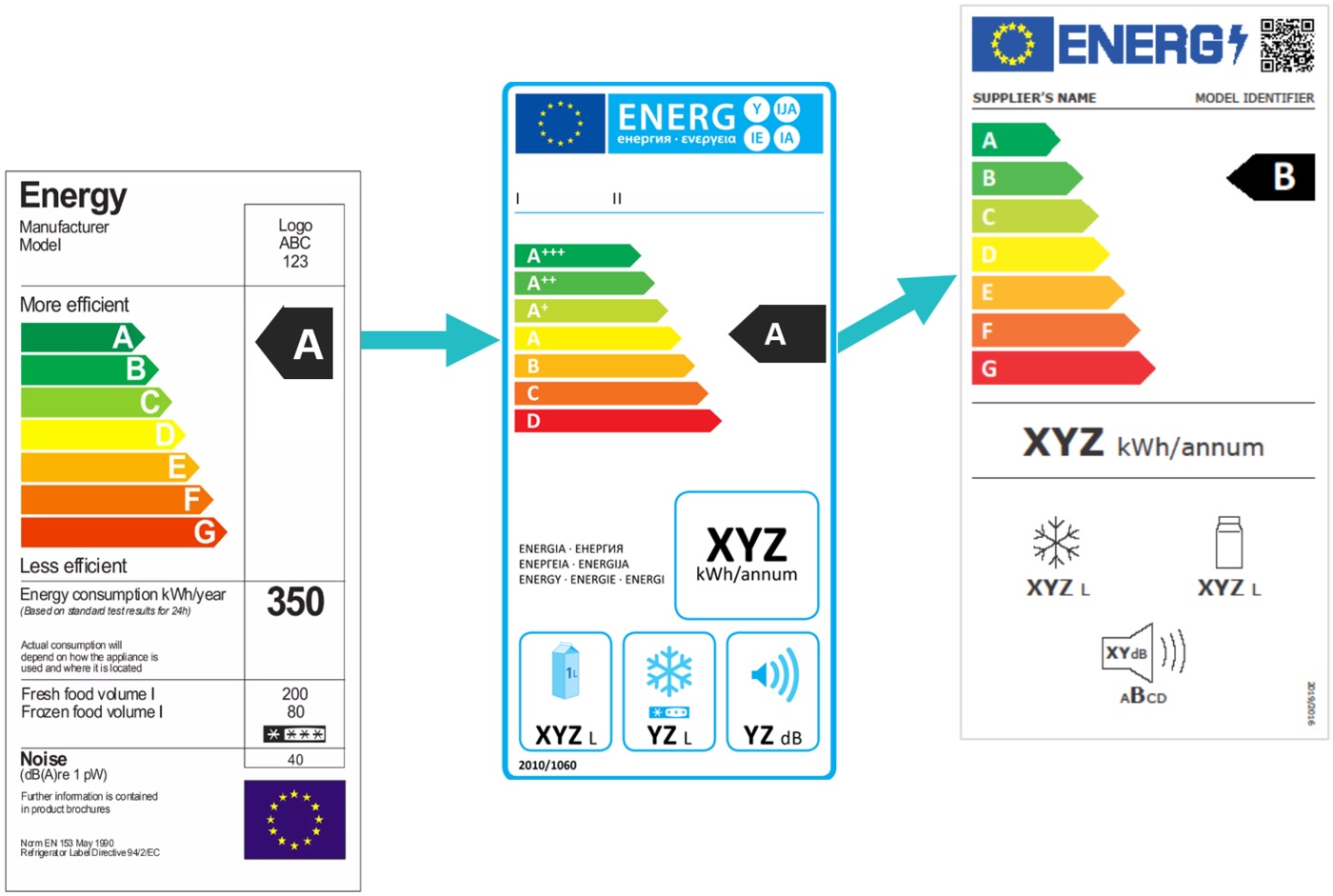
On 24 June 2026, the European Commission proposed making the product information sheet behind every EU appliance energy label fully digital, dropping the requirement that dealers be able to hand over a printed copy on request. The Commission estimates the change could save up to 125 million euros a year in administrative costs, phased in over ten years. This is a proposal, not a rule in force: it now needs approval from the European Parliament and the Council of the EU before anything changes for shoppers.
The proposal is formally titled COM(2026) 565 final, and was transmitted to the Council on 26 June 2026 as document 11199/26. It would amend Regulation (EU) 2017/1369, the framework law behind the A-to-G label CHA already links to via EPREL on its product pages, plus the separate tyre-labelling rule, Regulation (EU) 2020/740.
What would actually change for shoppers?
The core mechanism is about delivery, not content. Today, an energy label’s accompanying product information sheet must generally be available in printed form on request. The proposal would remove that printed-copy right and let suppliers choose a physical label, a digital one, or a QR code depending on the product and the sales channel, rather than one fixed printed-label rule applying everywhere. The A-to-G letter scale itself is untouched: this is about how the label reaches the buyer, not what it rates or which products carry one.
The proposal leans on EPREL, the European Product Registry for Energy Labelling, which the Commission’s own text says already holds over two million model entries. EPREL already lets the QR code on a physical label link through to fuller product data for shoppers, installers and repair professionals. The proposal would expand what EPREL is used for and build a technical link between EPREL and the future centralised Digital Product Passport registry, established under Regulation (EU) 2024/1781 and confirmed live as of 20 July 2026, so a manufacturer would not have to register the same product data twice in two separate EU databases.
Why is the Commission doing this?
The Commission’s own text cites a concrete compliance problem: national market surveillance authorities have found missing, fake, or wrongly placed labels, and wrong or inconsistent energy-efficiency declarations, particularly in online sales. Reworking how labels are delivered and cross-checked against EPREL is presented as part of the fix.
This is also one of twelve “omnibus” simplification proposals the Commission has now presented across sectors, following the 2024 Draghi report on European competitiveness, and it was published alongside a separate tax-simplification proposal on the same day. Combined, the Commission attributes an estimated 18 billion euros a year in administrative savings to all twelve proposals, against a stated target of cutting administrative burden by at least 25% for all businesses and at least 35% for small and medium enterprises by 2029, projected at 37.5 billion euros in total savings. For this proposal specifically, the impact assessment sets the savings at up to 125 million euros a year against an estimated 11.5 million euros in new compliance costs, a net saving that falls mainly to suppliers and retailers rather than being a direct consumer benefit.
Legally, the proposal would also repeal two older, narrower measures, Regulation (EC) No 106/2008 and Regulation (EU) No 174/2013, folding their scope into the updated framework.
When would it take effect?
No date exists yet, because the proposal has not been adopted. If the European Parliament and the Council agree a final text, the regulation would enter into force twenty days after publication in the Official Journal of the EU, but that publication has not happened and the co-decision process has only just begun.
The practical takeaway
Nothing changes for a shopper buying a washing machine, dishwasher or refrigerator today. The A-to-G scale, and the right to see a label before you buy, stay exactly as they are. What this proposal signals is a direction: EPREL and its QR code are set to become the primary way you check a label, ahead of a printed sheet. CHA already links to EPREL entries where available and covers what the label itself means in our guide to the EU energy label and in why the letter A means something different in every category. We will report again once this proposal reaches a Parliament or Council vote.
Related categories
Frequently asked questions
Is the EU energy label changing right now? +
No. On 24 June 2026 the European Commission published a proposal, COM(2026) 565 final, to change how energy labels are delivered. It must still pass through the European Parliament and the Council of the EU before it becomes law, and no date has been set for that to happen.
Would the A-to-G rating scale change? +
No. The proposal does not touch the A-to-G letter scale or which products carry a label. It targets how the label and its product information sheet are delivered, digital versus printed, and how the EPREL database connects to other EU product registries.
What should I do differently when buying an appliance today? +
Nothing yet. Check a model's registered energy label and specifications in the EPREL database as you already would. If this proposal becomes law, EPREL and its QR-code link are expected to become more central to that process, not less.
Sources
More news